
Sihman
Overview

Alpaca outsells sheep wool on the things wool gets blamed for

A shopper who has given up on wool socks usually has two complaints: it itches, and it makes their feet sweat. Alpaca answers both, which is why it has carved out the premium thermal shelf. It has no lanolin, the trigger behind most wool reactions, and a smoother fiber that does not prickle, so the wool-sensitive customer can finally wear it. It is partly hollow, so it traps more warmth per gram than merino. The catch is the other side of that smoothness: alpaca has almost no natural stretch and a slick surface, so an unblended alpaca sock bags out and wears through. The premium price only holds if the make solves that.

Engineered for warmth and recovery

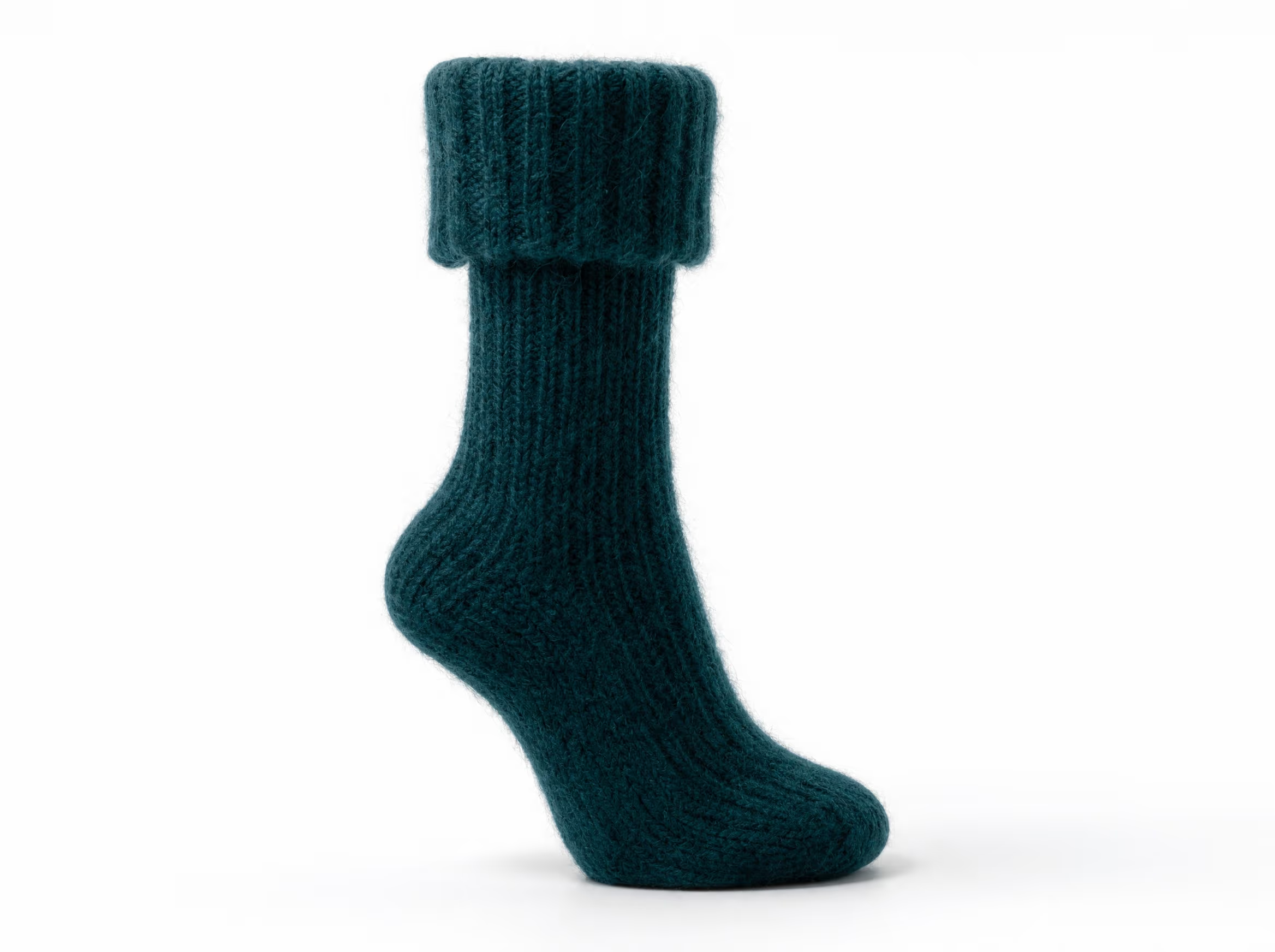
Alpaca’s slick, low-stretch fiber is the thing to build around. We carry it for the warmth and the hand, then blend in nylon for abrasion life and elastane for the recovery the fiber cannot supply on its own, and reinforce the heel and toe where a boot sock wears through first. The alpaca ratio, the cushion weight, and the length are yours to set at sampling and locked on an approved sample before bulk.

A typical alpaca build we knit

  • Fiber: alpaca-led blend with nylon for strength and 2 to 5% elastane for recovery
  • Weights: lightweight, midweight, and heavy boot, with optional terry cushioning
  • Lengths: crew, quarter, and over-the-calf boot, all on the same blend

A luxury fiber that wears like a workhorse

Alpaca sits at the top of the natural-fiber price ladder, so the make has to justify it: the blend and the reinforcement are what turn a delicate luxury fiber into a sock that survives a hiking season. Where merino is finer and springier, alpaca runs warmer and carries no lanolin, so the two answer different buyers and many programs stock both. Because it is made in Turkiye and ships at a minimum tariff, a premium thermal line still lands at a price a buyer will reach for. The merino wool line is the companion build for wearers who want a finer, more elastic wool.

Key features

Built to your spec

01

Warmer than sheep wool

Alpaca fiber is partly hollow, trapping more air per gram, so an alpaca sock runs warmer than merino at the same weight, the headline claim for thermal and cold-weather lines.

02

Lanolin-free and itch-free

Alpaca carries no lanolin and a smoother fiber surface, so it suits wool-sensitive and sensitive-skin wearers who cannot tolerate sheep wool, a real point of difference on shelf.

03

Moisture-wicking warmth

The fiber wicks moisture away from the skin and keeps insulating, so feet stay warm and dry through cold, active days.

04

Reinforced for real wear

Alpaca is smooth and naturally low in elasticity, so we blend in nylon and elastane and reinforce the heel and toe to give the sock the stretch, recovery, and durability a premium price has to earn.

Materials & customization

Yarns and finishing options

Materials

  • Alpaca fiber as the primary warmth fiber
  • Nylon for tensile strength and abrasion resistance
  • Elastane for stretch and shape recovery
  • Optional merino or recycled-wool blends

Customization

  • Alpaca content ratio tuned to warmth and price
  • Lightweight, midweight, and heavy boot builds
  • Crew, quarter, and over-the-calf boot lengths
  • Cushioned terry or flat-knit footbed
  • Knit-in patterns, brand colors, and logos
Who it’s for

Brands we manufacture for

  • Premium thermal and cold-weather brands
  • Outdoor, hiking, and boot-sock lines
  • Sensitive-skin and wool-allergy ranges
  • Diabetic-friendly and comfort-positioned lines
Why Sihman

Sihman Inc. is the sister company of Elteksan, Turkey’s leading private label sock manufacturer since 1999. Every pair is produced at a minimum tariff in our own facility in Turkiye for U.S. and European brands.

OEKO-TEX Std 100 Class II
BSCI
OCS (Organic Content Standard)
Sedex
Production · Brief

Request a Alpaca wool socks quote

A company email helps us route your inquiry faster. Personal addresses (Gmail, Outlook) are welcome too.

Pairs you plan to order (1,200 minimum per model/color/size; best value at 5,000+).

** Please note that our minimum order production quantity is 1,200 pairs per model, color, size. We do not offer design services; therefore, you must supply your own artwork. All of our products are manufactured at our facility in Turkiye.

Optional: send your design or a sample photo (JPG, PNG, GIF, WEBP or PDF, max 10 MB).

FAQ

Frequently asked questions

Is alpaca really hypoallergenic?
Alpaca contains no lanolin, the component of sheep wool that triggers most wool reactions, and its smoother fiber is far less likely to itch. That makes it a strong fit for wool-sensitive and sensitive-skin lines, including comfort-positioned and diabetic-friendly ranges. We manufacture to your spec; any medical claim on pack remains yours to validate.
How does alpaca compare to merino?
Alpaca runs warmer than merino at the same weight and suits wearers who cannot tolerate sheep wool, while merino is finer and more elastic. Many programs blend the two. We will help you balance warmth, hand, and price at sampling.
Does a pure alpaca sock hold its shape?
Alpaca has little natural stretch, so we blend in nylon and elastane and reinforce the wear zones. That keeps the warmth and softness while giving the sock the recovery and durability buyers expect.
Keep exploring

Related sock types & guides

← Browse all sock types