
How is a compression sock knitted to a target mmHg?
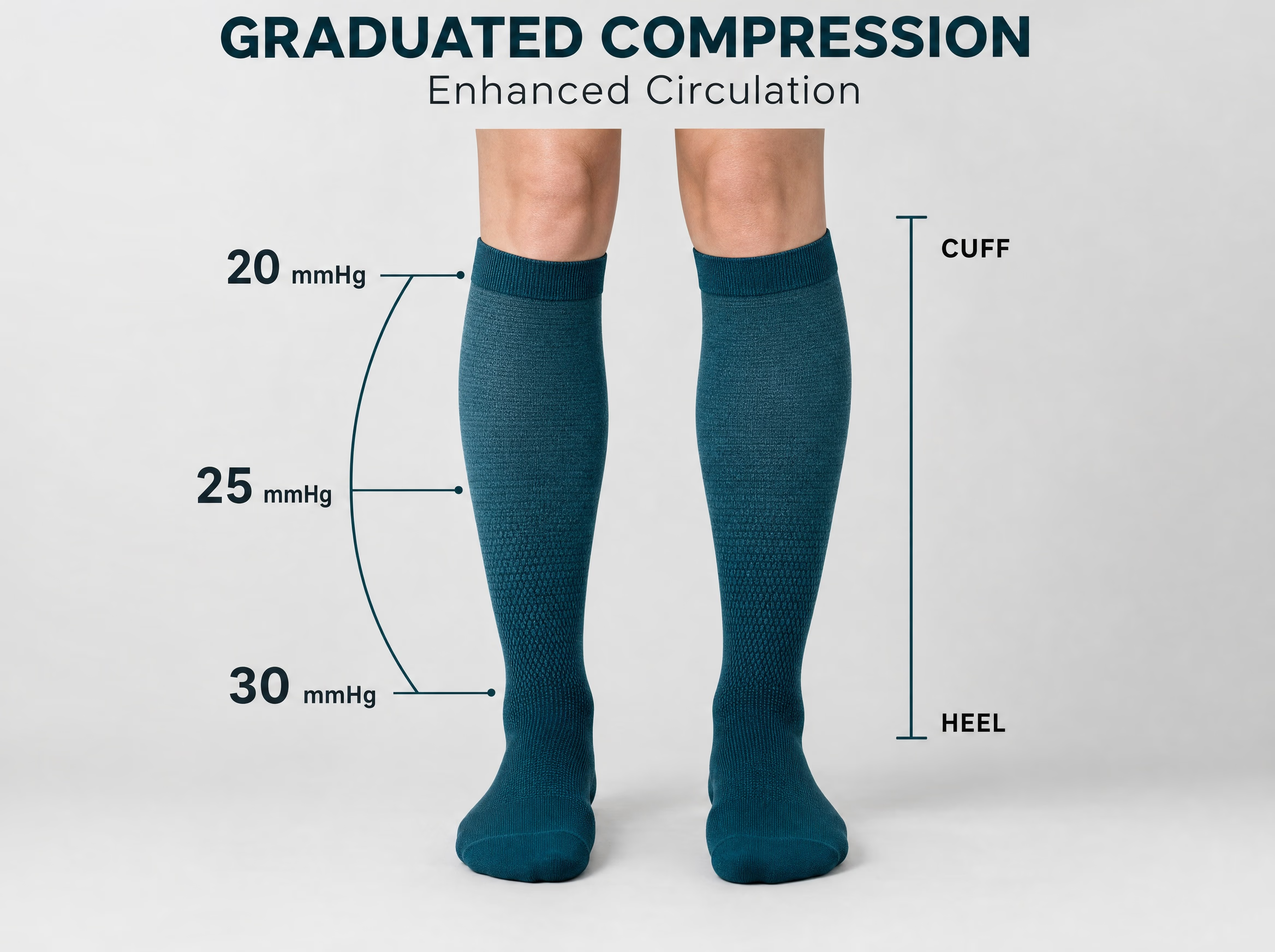
Graduated pressure comes from elastane tension and stitch density, tightest at the ankle and easing up the calf, knit to the mmHg you specify.
The problem with most compression socks: the pressure fades
Buyers who have sourced compression before know the failure mode. A sock that measures a clean 20 mmHg at sampling can drift well below its rated bracket after a few dozen washes, and a line built on a pressure claim quietly stops delivering it. In sport, travel, and pharmacy channels, the gap between the number on the label and the support on the leg is what drives returns and erodes trust. Holding the rated compression over the life of the sock is an engineering problem, and it is the one we build the product around.
Compression classes we knit to
Give us the bracket and the length; we tune the covered-elastane content and knit structure to land inside it, then verify against your spec at sampling.
- 8 to 15 mmHg, light: everyday wear, desk-to-travel, mild swelling
- 15 to 20 mmHg, moderate: long-haul travel, on-feet shifts, all-day sport
- 20 to 30 mmHg, firm: athletic recovery and stronger graduated support
- 30 to 40 mmHg, extra firm: clinical-grade ranges knit to your spec, with medical certification and claims remaining yours
One make partner for sport, travel, and medical lines
Across athletic recovery, long-haul travel, and pharmacy or medical-supply ranges, the construction fundamentals are shared; what changes is the pressure bracket, the length, and the branding. We knit crew, over-the-calf, and knee-high lengths with cushioned or thin footbeds, in your brand colors with knit-in logos and woven labels. You supply the artwork and the target spec; we own the knit engineering and the quality control. Production runs in Istanbul through our sister company Elteksan, ships into the United States on one duty-paid landed price with the duties already inside it, and scales from a first run of 2,000 pairs through repeat orders of 5,000 and up.
Built to hold its rated pressure
What wins a compression program is durability of pressure. We select covered elastane for elastic recovery, so the graduated profile a customer feels on day one is still there after months of wear and laundering. Paired with pair-to-pair and batch-to-batch consistency, that is what lets a brand keep standing behind its mmHg claim in channels where the claim is the whole product.