
Why do outdoor brands ask for merino socks?
Merino regulates temperature and resists odour over several days of wear, so hiking and travel lines blend it with nylon for real durability.
Buyers want merino’s feel, not merino’s holes
Merino is the most requested premium sock fiber on the market, and the most misunderstood. Customers come for the headline reel: warm but breathable, odor-resistant over days, soft enough to wear next to skin. What sinks a young merino line is the part nobody markets, durability. Pure merino is a fine, soft fiber with poor abrasion resistance, so a 100% merino sock blows out at the heel and toe within a season and comes back as a return. The brands that win the category do not sell more wool. They sell merino engineered around its one weakness.
Wrapped around a core that lasts
The durable merino brands all do one thing the failed ones skip: they stop knitting pure wool. We do the same, knitting fine-micron wool, 17.5 to 19.5 micron for next-to-skin softness, wrapped around a nylon core or blended with nylon so the sock keeps merino’s hand and warmth while gaining the tensile strength to survive real wear. A touch of elastane holds the arch and brings the shape back wash after wash. The blend, the micron, and the cushion weight are yours to set at sampling, locked on an approved sample before any bulk run.
Three builds we knit most
- Lightweight liner: thin, fast-drying, for warm-weather hiking and dress-boot wear
- Midweight everyday: cushioned underfoot, breathable up top, the travel-and-trail workhorse
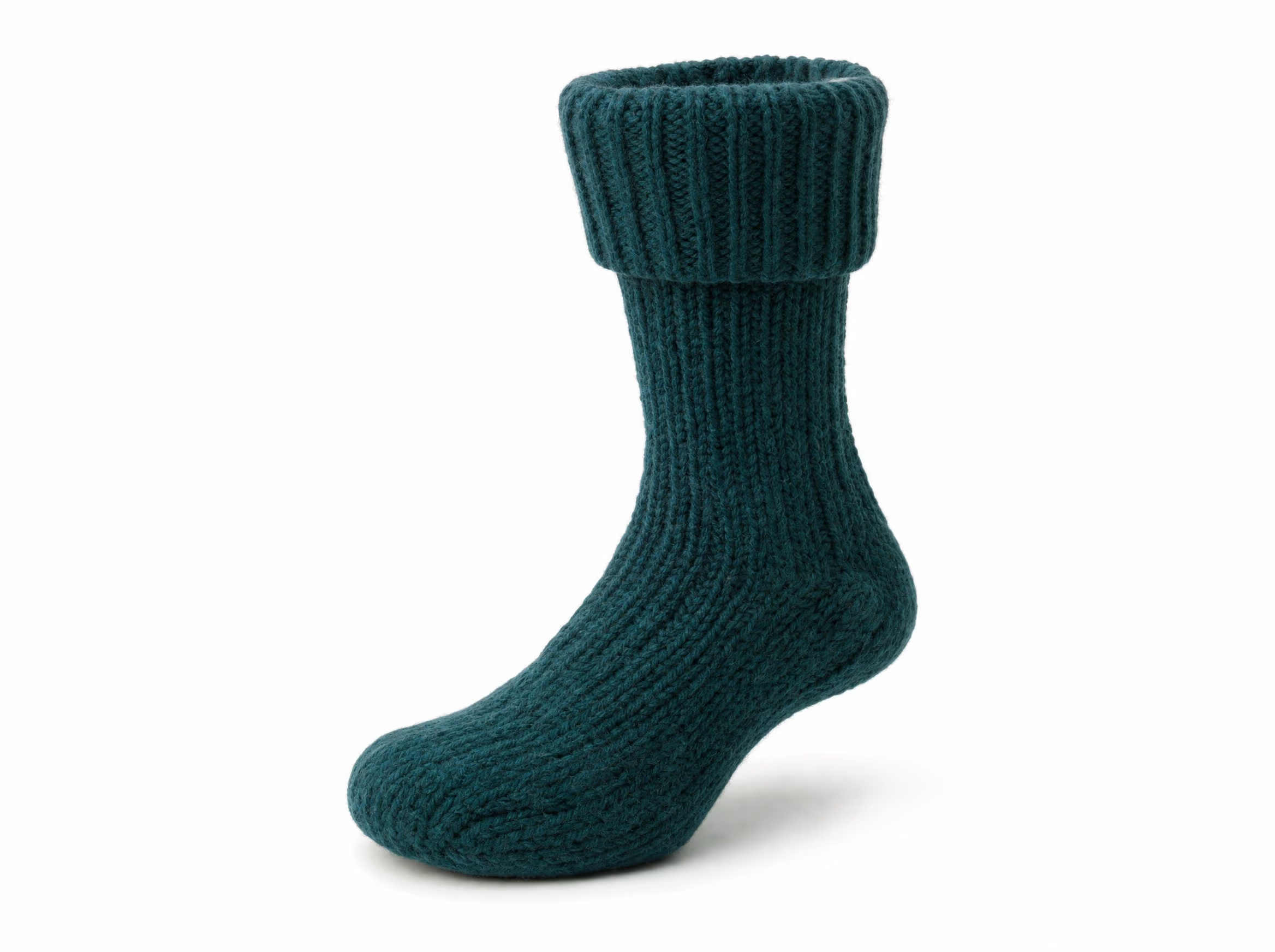
- Heavy boot: dense terry cushioning for ski, winter, and cold-weather lines
Warmth that survives the wash count
A merino sock is judged a year in, at the heel and toe, and that is the number we build to. The reinforcement and the nylon core are not cost-savers, they are what lets the line come back as a reorder instead of a return. It is knit in Turkiye and lands on one duty-paid price, which keeps a premium fiber at a price a buyer will actually pick up. For an even warmer, lanolin-free option for cold or sensitive feet, the alpaca wool line runs on the same reinforced construction.